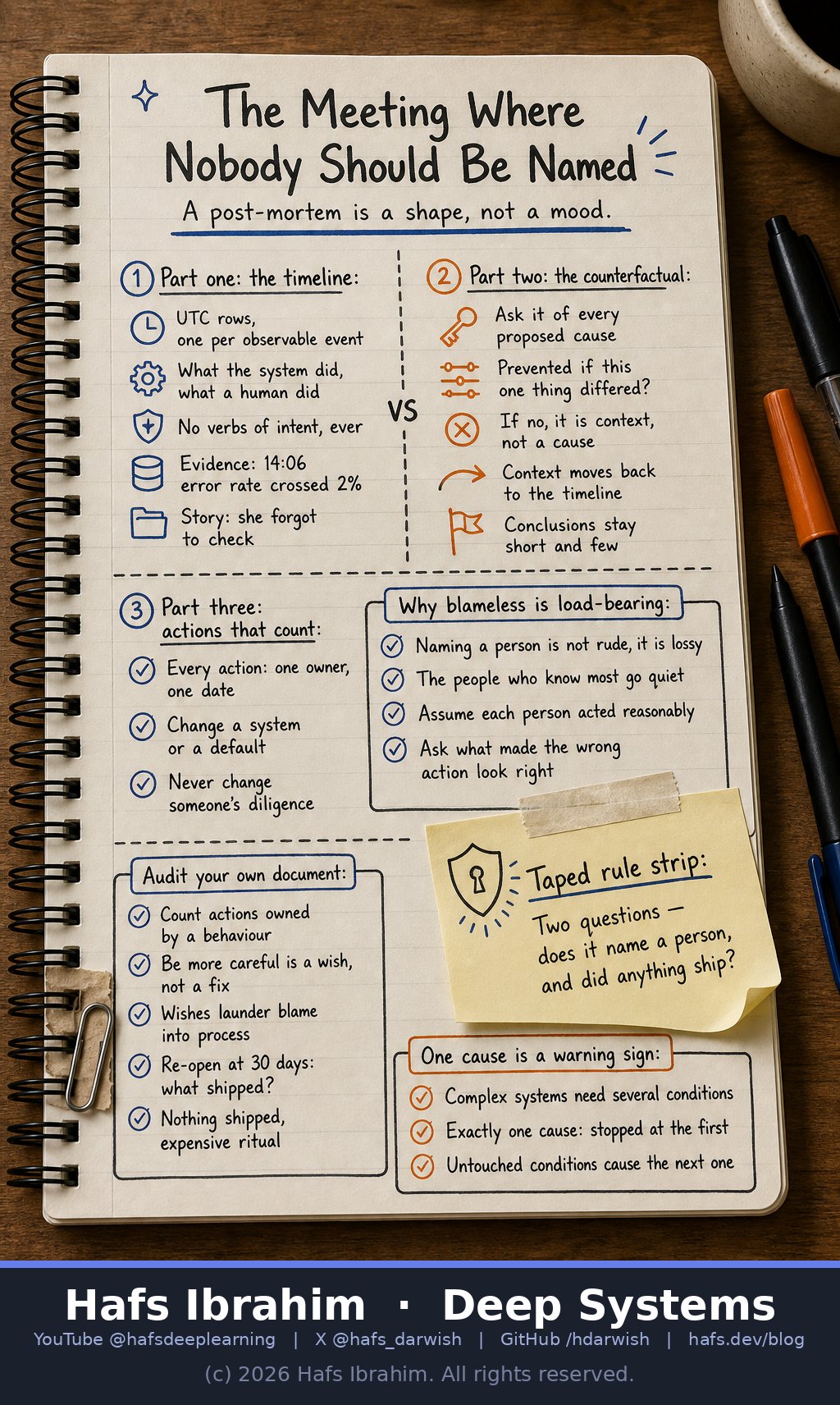
The Meeting Where Nobody Should Be Named
Subtitle: A post-mortem is a shape, not a mood.
- Left column - Part one: the timeline:
- UTC rows, one per observable event
- What the system did, what a human did
- No verbs of intent, ever
- Evidence: 14:06 error rate crossed 2%
- Story: she forgot to check
- Right column - Part two: the counterfactual:
- Ask it of every proposed cause
- Prevented if this one thing differed?
- If no, it is context, not a cause
- Context moves back to the timeline
- Conclusions stay short and few
- Part three - actions that count:
- Every action: one owner, one date
- Change a system or a default
- Never change someone's diligence
- Why blameless is load-bearing:
- Naming a person is not rude, it is lossy
- The people who know most go quiet
- Assume each person acted reasonably
- Ask what made the wrong action look right
- Audit your own document:
- Count actions owned by a behaviour
- Be more careful is a wish, not a fix
- Wishes launder blame into process
- Re-open at 30 days: what shipped?
- Nothing shipped, expensive ritual
- One cause is a warning sign:
- Complex systems need several conditions
- Exactly one cause: stopped at the first
- Untouched conditions cause the next one
Taped rule strip: Two questions - does it name a person, and did anything ship?